If you are a professional drone operator and would like to When operating under STS-01, one of the most common questions is whether you need a drone with a C5 class designation. The short answer is yes: To comply with STS-01, the UAS must bear a valid C5 mark, together with the relevant documentation and declaration of conformity.
In this guide, I explain when a C5 drone is required, the difference between buying a factory-built C5 and using a C3 with a valid conversion kit, and why a C2 cannot be converted to a C5 simply by adding accessories.

When is a C5 drone mandatory?
For those operating under STS-01 standard scenarios, the regulations make it clear that a C5 drone with official C5 class marking is mandatory for Specific Category STS-01. This means that it is not enough for a drone to technically meet the requirements, nor for an operator to declare that their drone meets the necessary conditions. The marking must be official.
This implies that:
- You cannot use a drone without official marking
- It is not permissible to add accessories on your own to modify the drone and make it compliant with the requirements.
- Speed limitation or firmware updates are not sufficient.
In summary, if you operate under the STS-01 scenario, a C5 drone is a necessity. However, if you operate under a SORA-based operational authorisation framework, the obligation to have a C5 disappears. Here, risk analysis prevails over the drone’s class marking.

What requirements must a C5 drone meet for STS-01?
A C5 drone for STS-01 must meet, amongst other things, the following key requirements:
- Visible C5 marking.
- EU Declaration of Conformity.
- Direct remote identification where applicable.
- Modo de baja velocidad limitado a 5 m/s.
- Medios para terminar el vuelo de forma segura.
- User manual and adapted technical documentation.
- Configuration approved by the manufacturer or valid kit.
The conversion kit that turns your C2 or C3 into a C5 drone has technical features that make it suitable for operations in the specific category.
This product is compatible with the DJI Mavic 3E (Enterprise), DJI Mavic 3T (Thermal), DJI Mavic 3M (Multispectral), DJI Mavic 3 Pro, and DJI Mavic 3 Cine models.
Checklist before buying a C5 drone or conversion kit
Before buying a C5 drone or a conversion kit, check the following points:
- Ensure that the model is displayed with the correct class.
- An EU Declaration of Conformity must be provided.
- Let’s hope that the C5 label is genuine and not just a marketing ploy.
- Make sure the kit is compatible with your exact model.
- The manufacturer should document the final configuration.
- The drone must be capable of direct remote identification.
- The manual must include the applicable operating conditions.
Important: before purchasing any drone or kit, check that the specific model, configuration and documentation allow it to be operated as a C5. It is not enough for the drone to be compatible with accessories or to have good performance: there must be a marking, a declaration of conformity and valid documentation for that configuration.


These are some of the most important ones:
- MTOM (Maximum Take-Off Mass) less than 25 kg.
- Direct remote identification
- Low speed mode limited to 5 m/s.
- Technical documentation and manual adapted to the corresponding STS scenario.
- Reduce the rate of descent
- Mitigates the impact upon landing
These drones are specifically designed to operate in this particular category, complying with the strict safety requirements demanded within this framework.
Can a C2 drone be converted to a C5?
No. A drone classified as C2 cannot legally be converted to C5 simply by fitting an accessory kit. This is one of the most common misunderstandings among operators, as some products or marketing messages may suggest that simply installing an accessory is sufficient, but this is not how the regulations work.
The conversion specified in the regulations involves upgrading a C3 UAS to a C5 UAS using a compatible kit, provided that the assembly is properly documented, marked and supported by a declaration of conformity.
Many operators wonder if they can convert a C2 drone into a C5 using a conversion kit. The short answer is no, or at least not directly.
Although some manufacturers offer kits to modify a C2 drone to a mandatory C5 drone if you want to fly in a specific category, the regulations do not allow this easily. The reason is that an official conversion from a C2 to a C5 implies that:
- The company carrying out the modification becomes the new manufacturer of the drone.
- A new declaration of conformity must be issued in accordance with the new class marking.
- The C2 classification label should be removed and the drone should be identified with the new C5 marking, always as part of a formal market authorisation process.
- The modified drone will be treated as a new aircraft placed on the market.
Once this process has been completed, it will not be possible to re-mark the drone as C2. This is because, according to regulations, the conversion involves such a significant modification that the final product can no longer be considered a C2.
If you are interested in converting your C2 drone to a C5, we recommend that you consult with approved manufacturers who offer official conversion kits. It is essential to follow the established procedures to ensure that the conversion is legal and complies with all regulatory requirements.
You can contact us for more information on how to purchase the right conversion kit for your drone and ensure that you meet all the required standards.
And what about C3 drones?
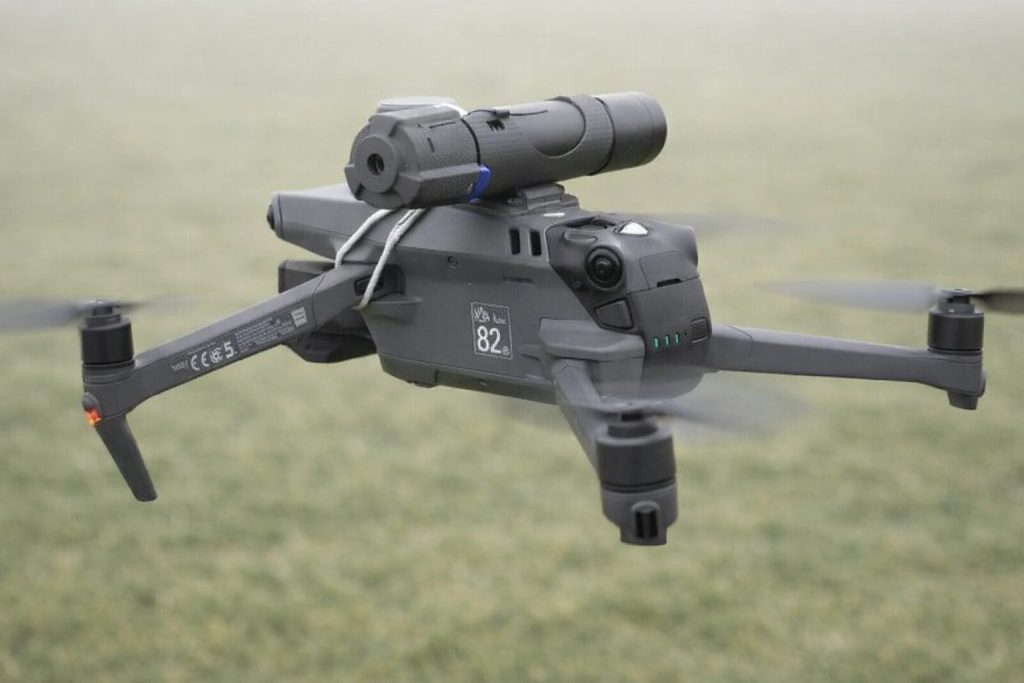
As for C3 drones, the conversion process is somewhat similar, as they also require an official conversion kit to be considered C5.
In some cases, a C3 drone that is compatible with a C5 accessory kit may retain both class designations, provided this is supported by the manufacturer’s documentation.
Manufacturers already offer official conversion kits to upgrade certain C3 drones to C5, provided that the correct procedures are followed and current regulations are complied with.
What options do I have based on my current drone?
If you have a factory-standard C5 drone: you can use it for STS-01 provided it meets all other operational requirements.
If you have a C3 that is compatible with the C5 kit: you could use it if the kit is valid and the documentation certifies the vehicle as a C5.
If you have a C2: you cannot convert it to a C5 using an accessory kit.
If you have an unmarked legacy drone: it does not fit into STS-01 as C5.
If your operation does not fall under STS-01, you will need to consider applying for a specific operational authorisation, usually via SORA.
How can I legally purchase a C5 drone?
Since it is not possible to legally convert a C2 into a C5 on your own initiative, the available options are:
- Purchase a factory-made C5 drone: Some drone models already come with the C5 marking directly from the factory, which ensures that they meet all the requirements of scenario STS-01.
- Purchasing a drone certified as C5 by a new manufacturer: This is an option when a manufacturer modifies a C2 or C3 to adapt it to C5 standards, but with a new declaration of conformity and serial number.
Is it worth converting a C2 to a C5?
It depends. Converting a C2 to a C5 might seem appealing, but it’s neither a straightforward nor a viable option using a simple conversion kit:
- It is not a simple conversion: As we have explained, conversion means that the operator becomes the new manufacturer, which entails a series of responsibilities and administrative procedures.
- Legal alternatives: If you really need a C5 drone to operate under the STS-01 scenario, the simplest solution is to purchase a factory-made C5 drone or one that has been approved as such.
Common errors regarding C5 class marking
There are several common misconceptions about C5 drones:
- Assuming that any drone weighing less than 25 kg can be a C5: Not all drones are designed to operate in this specific category. Not all of them meet the requirements to be labeled as C5.
- Believing that installing a conversion kit is sufficient: As we have seen, modifying a C2 or C3 to a C5 involves a formal process and is not simply a matter of adding accessories.
- Manually limiting the speed and considering it a C5: Speed limitation is not sufficient; it must be an official process endorsed by the manufacturer.
Not sure if your drone is compatible with STS-01?
If you’re planning to fly commercially and need to know whether your equipment complies with STS-01, whether you need a full C5 licence, or if your situation requires a different operational authorisation, I can help you assess your situation before you buy the wrong drone or kit.
¿No tienes claro si tu dron sirve para STS-01?
Antes de comprar un dron, instalar un kit o preparar una operación, revisa si tu equipo encaja realmente en STS-01 y evita errores que puedan costarte tiempo, dinero o problemas legales.
FAQ (Frequently asked questions) about the mandatory C5 drone for the specific category STS-01
Is a C5 drone mandatory to operate on STS-01?
Yes. To qualify for STS-01, the UAS must have a C5 class marking. If it is not a “true” C5 (with its rating and documentation), it does not fit into that scenario.
Can I perform STS-01 with an unmarked (legacy) drone or with a C2/C3?
No, not in STS-01. In practice, you can only operate if the drone is marketed as C5 (for example, factory C5 or a C3 with an accessory kit that classifies it as C5, with the corresponding documentation).
Can a C2 drone be converted to a C5 with a kit?
According to information published by AESA, a UAS marked C2 cannot be converted to C5 using an accessory kit. If you are considering a “conversion,” verify that there is a formal way to market it as C5 with its declaration of conformity and marking.
So, what conversion to C5 is actually covered by the regulations?
The planned route is C3 → C5 using a compatible accessory kit. That kit and its documentation must support that the assembly is identified and documented as class C5.
What are the key requirements for a C5 drone designed for STS-01?
The essential thing is that it is marked C5 and has an EU Declaration of Conformity. On a technical level, among other points, it must include a low-speed mode (≤ 5 m/s) and means for the pilot to safely terminate the flight, in addition to the applicable remote identification requirements.
Is low speed mode (5 m/s) mandatory on a C5?
Yes. A C5 must have a low-speed mode selectable by the remote pilot that limits ground speed to no more than 5 m/s (except for exceptions such as tethered UAS).
Is Remote ID/DRI mandatory in a C5 and STS-01?
Yes. Direct Remote Identification (DRI) is required in this specific category, and a class-marked UAS must comply with this requirement when applicable. In practice, to operate STS-01, you must have DRI in accordance with regulations.
Is it mandatory to carry a parachute and/or FTS to be C5?
The C5 technical framework requires that the pilot have the means to terminate the flight (e.g., a flight termination system or equivalent depending on the design). Parachutes are very common in commercial kits/configurations for STS-01, but what “counts” is that your drone is documented as C5 by the manufacturer/kit, with its configuration and requirements met.
How can I verify that my drone is actually a C5?
Look for it in three places: (1) the physical C5 label on the drone (and on accessories, if applicable), (2) the EU Declaration of Conformity indicating the class, and (3) the manufacturer’s manual/documentation associated with that C5 configuration.
Where can I find an official list of models with class markings (including C5)?
The EASA website has a list of “Approved Drones for EU Operations” that includes models with class markings (C0–C6), including those listed as C5 (STS-01).
I hope everything about the C5 class drone is now clear to you. If you are interested in learning more about specific category operations, read our article on Specific Category STS-01, where we take an in-depth look at how the regulations for legally operating drones within this framework are applied.
Bibliografía: https://www.seguridadaerea.gob.es/es/ambitos/drones/requisitos-de-uas-drones/listado-de-fabricantes-y-modelos-de-uas